

ABNA24 - Washington and Tel Aviv waged a war on Iran with the illusion of a rapid win. But soon and after Iran closed the Strait of Hormuz in reaction to the aggression, the conflict soon spiralled into a regional and even an international one; a quagmire even its creators could not escape. Washington spent several days trying to reopen the Strait by targeting Iran’s missile and naval capabilities and boasting about its claimed achievements, but it failed.
At that point, the US president moved to pull NATO into the fight, a card long considered the US ’s military and logistical trump card, but one that proved useless in the war, called Ramadan War in Iran.
To Washington’s frustration, no NATO member responded affirmatively to calls by the Americans to help. Britain, France, Germany, and Spain all kept away from Trump's adventures in Iran. Many right-wing American media outlets described this NATO response a "betrayal" of the US, with Trump vowing to "punish" them. But how much is this narrative correct?
The North Atlantic Treaty Organization was, in essence, a product of the post–World War II landscape and the Cold War era, a military alliance formed in 1949 to provide collective defense for Western Europe and North America against the Eastern Bloc led by the Soviet Union. Beyond its functions in training, joint exercises, military technology exchange, and other cooperation, NATO rested on a clear principle: an attack on one member was considered an attack on all, obligating every member to participate in that country’s defense.
Until the end of the Cold War and the collapse of the Soviet Union, NATO largely remained a defensive pact on paper. But in the 1990s, it rapidly evolved into an interventionist force, from the Bosnian war to Iraq, Afghanistan, and Libya. NATO effectively became an extension of American military, logistical, and operational power around the world, especially in west Asia. This was unsurprising, as the US, the new global superpower, was the main financial and technological contributor, shouldering the bulk of NATO’s budget and military capability. Decision‑making, consequently, was effectively driven by Washington.
Today, however, serious divisions appear to have emerged among NATO members. Many are no longer willing to bear the costs of American wars and prefer to step back. Several major factors underlie this rift. First, as noted, NATO has drifted far from its original purpose.
Its structure was designed for a Cold War, bipolar world. After the Soviet collapse, NATO adopted a new posture and, in a unipolar order, became a tool of US military intervention. But the global order is now shifting.
New global and regional powers outside NATO have increasingly risen; powers such as China, whose economic and technological heft rivals that of the US and upon which Europeans have become dependent in various ways.
In such conditions, decisions are not easy to make for the NATO members and they grow cautious.
Additionally, earlier, the US could promise low-cost and short wars, but now it is far from capable of this.
The war with Iran revealed a stark reality: The US does not hold the absolute superiority it has always boasted of and can sink NATO into a swamp the Europeans are guarding against.
Another factor is shifting public view in the NATO member states. People of these countries, for example Britain, found themselves deceived by Washington in Iraq war for instance. They waged Iraq war under the ruse of weapons of mass destruction, but soon and after costs and casualties, they understood that they were lied to by the Americans and their leaders and the war was just about the US interests in energy.
The experience in Libya showed that the rhetoric about fighting dictatorship and terrorism, and pro-democracy slogans of were hollow, and that military action only pushed the world into deeper instability. As a result, public opinion in these countries has become far more sensitive to any participation in wars.
Russia’s annexation of Crimea and then the war in Ukraine further deepened NATO members’ doubts. After several years of fighting, they realized that billions of dollars had been poured into confronting Russia without producing any decisive result. The US has failed to stop Russia’s advance; it may be able to slow it, but not halt it. NATO has not even managed to prevent Russia from moving toward Europe’s western borders.
Amid this uncertainty, Trump returns to the White House, himself a major factor in weakening NATO and in discouraging its members from joining the US in another war.
From the very start of his second term, Trump sharply attacked NATO. He insisted that Europe must stand on its own feet and pay for its own defense. For that reason, he pushed European countries to increase their share of NATO’s budget and even threatened Germany with pulling American forces out of the country.
Additionally, Trump's war of tariffs against Europe was not a pleasant experience to the European leaders. 25-percent tariffs were imposed on almost all of NATO members, at a time they were funding Ukraine against Russia. Europeans cannot simply forget this American economic hostility.
But beyond all of these, NATO is now concerned that Washington may betray them. The first signs of distrust emerged in that prominent merging of Ukrainian President Volodymyr Zelensky with Trump and Vice President JD Vance at the White House last year, where he was humiliated by the Americans in front of the cameras and was forced to yield to some of Moscow's demands. This scene was grave for NATO members afraid of potential Russian attack, eroding their confidence in the Americans.
The next stage, however, marked a turning point for NATO’s history: Trump’s “Grand America” plan, in which he demanded the annexation of Canada and Greenland, two NATO members, to US territory. Greenland, in particular, faced the threat of military occupation. This is precisely the moment NATO becomes meaningless.
This skepticism continued during Iran war, where Trump entered the conflict without coordinating with NATO, solely at the provocation of a non-NATO ally, the Israeli regime. Furthermore, by granting sanctions waivers to Russia, which was simultaneously engaged in a war with the European NATO, Washington demonstrated it placed no importance on the interests of its allies.
After all this, in the war with Iran, the US, having failed to force the Strait of Hormuz open, resorted to threats and pressure to drag NATO into the war. However, considering all the aforementioned precedents, NATO members see that the White House is trapped in a situation from which it cannot extricate itself. The US possesses the world’s most powerful army; consequently, the presence of others is not only unhelpful but appears merely to incur costs.
Meanwhile, the contrast of interests among member states has added to the complexity of the situation. Some countries remained silent, some objected, and some, like Spain, openly condemned the US aggression, refusing to back down from Trump’s threat to sever trade relations with Tehran.
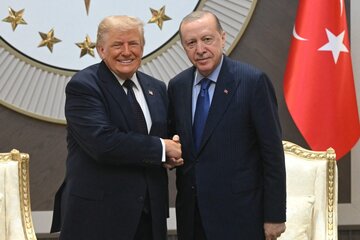
Meanwhile, Turkey, also a member of NATO, sees its tensions escalating day by day with Israel. Regardless of how serious these tensions are, a country that has just threatened Israel with war cannot be expected to stand by it in a way or another in a war against Iran.
This is a true NATO situation: A military bloc lacking its original purpose of existence, its distrust in the US running high, and the mechanisms that once made pillars of its existence are not working like the past. Still, all these do not mean that NATO is about to collapse, but obviously shows signs of gradual erosion.
Every day, more scattered voices are heard among the members regarding the possibility of leaving the treaty, whispers that were previously hard to imagine and now serve as a serious warning to the US.
This situation becomes more alarming when the US leadership itself embarks on a path that further weakens NATO’s cohesion. It is as if, before other members decide to leave, Washington itself might inflict the greatest blow upon the very alliance that was the pillar of Western security for decades, through unpredictable behaviors and contradictory policies.
Overall, NATO is still standing, but every day it moves to becoming an organization that is defined by its past, not present, power, a past that no longer matches the present day realities of the world.
/129



Your Comment